
UCLA's collection of World War II era German aerospace reports
Published 2026-09-17
Summary
UCLA has a microfilm collection of World War II era captured German aerospace reports (WorldCat link). The collection is largely unknown to the outside world but nonetheless contains a vast amount of historical and potentially still useful technical information. This article summarizes the information that I know about this collection for the benefit of future researchers.
The value of old documents in literature reviews
Researchers often conduct literature reviews to learn about a subject. Conducting literature reviews helps researchers determine for themselves which previous work still matters and helps find overlooked work, especially work that may stand out more to modern audiences than contemporary ones.
A common technique is to start with a recent review paper and then to iteratively search backwards through its references (a form of backward searching), often guided by looking for the source of a particular idea or piece of data. In aerospace research, backward searching often leads to references to documents produced by German researchers during World War II, especially reports distributed by the Zentrale für wissenschaftliches Berichtswesen über Luftfahrtforschung (ZWB).
Unfortunately, many researchers assume that older documents are too difficult to find and do not attempt to locate and read them when conducting literature reviews. ZWB documents are somewhat difficult to find, especially in the United States, but I know of several ways to locate them when I need to.
Other collections of captured German documents in the United States
The most complete collections of German aerospace research from World War II are in Germany. It is possible to request some of these materials some of the time through interlibrary loan, but I have not had much success using interlibrary loan for these kind of materials in general. In the United States, the most successful method is to locate the materials and visit them yourself.
There exist two other large collections of captured German aerospace research in the United States: a collection at the National Air and Space Museum (NASM) and a collection at the Library of Congress.
The most complete collection is held by NASM. This collection was originally created by a predecessor agency to the Defense Technical Information Center. Certain organizations could request copies of documents in this collection from the military by referencing information in card catalogs given to some organizations or by consulting a "Desk Catalog" containing the same information in book form (see also the Library of Congress for a copy). NASM maintains an updated digitized version of this card catalog as an internal database.
The Library of Congress also has some duplicate reels from the NASM collection in the technical reports collection, but the collection is fragile and mostly incomplete, representing only 8 percent of NASM's collection.
NASM has a rather slow process for requesting materials from this collection, so it is not my preferred method to locate these materials when my research needs them. The Library of Congress technical reports collection contains many of these reports in its Publication Board (PB) collection. These reports are unavailable from NTIS. The key to finding these reports is to look up the PB number given the ZWB report number. In my experience, the Library of Congress has most ZWB-FB (Forschungsbericht) reports but only some ZWB-UM (Untersuchungen und Mitteilungen) reports.
Both of these collections are only available in the DC area, and both also have some limitations to them. The UCLA collection matters for two reasons:
-
It is on the West Coast.
-
It is both broader than the Library of Congress collection and easier to access than the NASM collection.
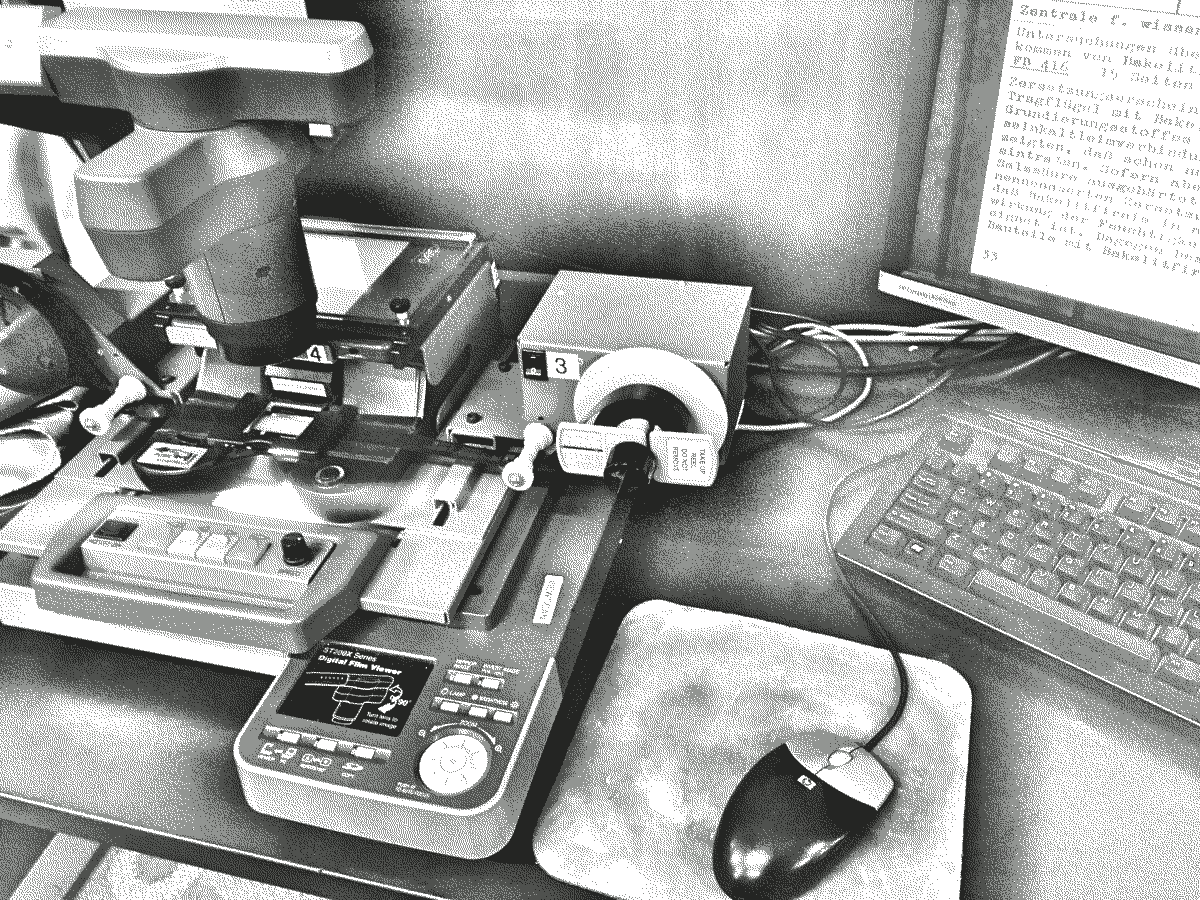
The main issue with the UCLA collection is its poor condition. The collection is quite fragile and often poorly photographed. Many reports are out of focus. There are several reels of in-focus "retakes", so it is important to check for those too when looking for a particular report.
Contents of the collection
UCLA provides a rather incomplete and minorly incorrect list of the reels and their contents. Based on my experience, this list is broadly correct but occasionally incorrect in its fine details. I have not reviewed all of the hundreds of reels, so I base my discussion on what reels that I did in fact review.
ZWB cards
The collection opens with a compilation of abstracts for reports distributed by the Zentrale für wissenschaftliches Berichtswesen über Luftfahrtforschung (ZWB). The ZWB served as a clearing house for German aerospace research before and during World War II. The ZWB collected reports from industry and academia and indexed them into a central index. Various organizations had card catalogs with abstracts for these reports on index cards (sometimes called ZWB cards).
The UCLA collection contains several incomplete sets of these ZWB cards.
-
The United States Strategic Air Forces in Europe captured and filmed the first set (reels 1 to 3 of the collection). Reel 1 is a copy of the fourth and final ZWB subject classification scheme (also on WorldCat but only in Germany). Reels 2 and 3 contain ZWB cards organized by this subject classification scheme. The contents of reels 2 and 3 are also available at the National Archives in paper form. An English translation of the ZWB subject classification scheme is available from the Library of Congress technical reports collection as PB 38065 and from the Library of Congress stacks as report 457 of a military translation series.
-
The Göttingen documents section of the collection (see next section) contains the second set of ZWB cards (reels 24 to 26). Reel 24 organizes the abstracts by the classification scheme (from A to R). Reel 25 continues the organization by the classification scheme to the end of the classification scheme and then lists abstracts organized by ZWB-FB number. Reel 26 lists abstracts organized by ZWB-UM number.
-
Reels 217 to 220 contain the most complete set of ZWB cards. These cards were compiled and translated into English by the Air Documents Research Center, a direct predecessor to the modern Defense Technical Information Center (DTIC). They are organized by the ZWB classification scheme. For each card, the original German card appears on at the top of a frame, and a translated English card appears at the bottom of the frame. The German cards are somewhat harder to read due to having a darker background than the English ones. This collection is available from the Library of Congress technical reports collection as PB 93926 to PB 93929 (English description on HathiTrust). Some other universities also have a copy of this collection of ZWB cards.
-
There are some additional, largely isolated ZWB cards collected from LFA Völkenrode in reels 276 to 286, but they are scattered throughout. I did not the time to look too closely at these reels, so I am unaware of the extent of this part of the collection.
The value of the index cards comes mostly from their classification scheme and the ability to find related documents easily.
Documents from AVA Göttingen
The bulk of the collection (around 190 reels from reels 24 to 216) is documents captured from Aerodynamische Versuchsanstalt Göttingen (AVA Göttingen). I have located an index for this portion of the collection at the National Archives and have uploaded it to the Internet Archive for posterity. I wish that I had this index when I was at UCLA, but I only found it afterwards. The index itself says that its creation required "the efforts of three officers for the better park of six weeks" to compile.
One issue with this index is that the reel numbers do not correspond to the reel numbers of the overall collection, making it difficult to request a particular reel. I have listed all of the reels that I checked out in this range below with their corresponding Göttingen documents reel numbers. There is no fixed correlation between the two.
| Overall | Göttingen | Overall | Göttingen | Overall | Göttingen | Overall | Göttingen |
|---|---|---|---|---|---|---|---|
| 24 | 10 | 80 | 76 | 130 | 134 | 181 | 193 |
| 25 | 11 | 90 | 88 | 131 | 135 | 190 | 202 |
| 26 | 12 | 91 | 89 | 132 | 136 | 197 | 209 |
| 27 | 20 | 92 | 90 | 140 | 146 | 198 | 210 |
| 28 | 21 | 93 | 91 | 141 | 147 | 199 | 211 |
| 29 | 22 | 94 | 92 | 142 | 148 | 200 | 212 |
| 30 | 23 | 95 | 93 | 143 | 149 | 201 | 213 |
| 31 | 24 | 96 | 94 | 144 | 150 | 202 | 214 |
| 32 | 25 | 100 | 98 | 145 | 151 | 203 | 215 |
| 33 | 28 | 110 | 109 | 146 | 152 | 204 | 216 |
| 34 | 29 | 120 | 124 | 147 | 153 | 205 | 217 |
| 35 | 30 | 121 | 125 | 148 | 155 | 206 | 218 |
| 36 | 31 | 122 | 126 | 149 | 156 | 210 | 223 |
| 37 | 32 | 123 | 127 | 150 | 160 | 211 | 224 |
| 38 | 33 | 124 | 128 | 160 | 170 | 212 | 225 |
| 39 | 34 | 125 | 129 | 170 | 180 | 213 | 226 |
| 40 | 35 | 126 | 130 | 177 | 188 | 214 | 227 |
| 50 | 45 | 127 | 131 | 178 | 189 | 215 | 228 |
| 60 | 55 | 128 | 132 | 179 | 191 | 216 | 229 |
| 70 | 65 | 129 | 133 | 180 | 192 |
The index reports that there were several other copies of this part of collection originally. I have failed to locate any of the other copies.
Peenemünde wind tunnel group reports
Reels 224 to 225, 244 to 246, and 293 contain reports from the wind tunnel department of the Werner von Braun's Peenemünde research center. These reports contain an extensive amount of wind tunnel data for the V-2 rocket and its associated designs, along with a large collection of basic experimental data on supersonic aerodynamics. Peter Wegener worked for the wind tunnel department during the war and summarized its work in his memoir.
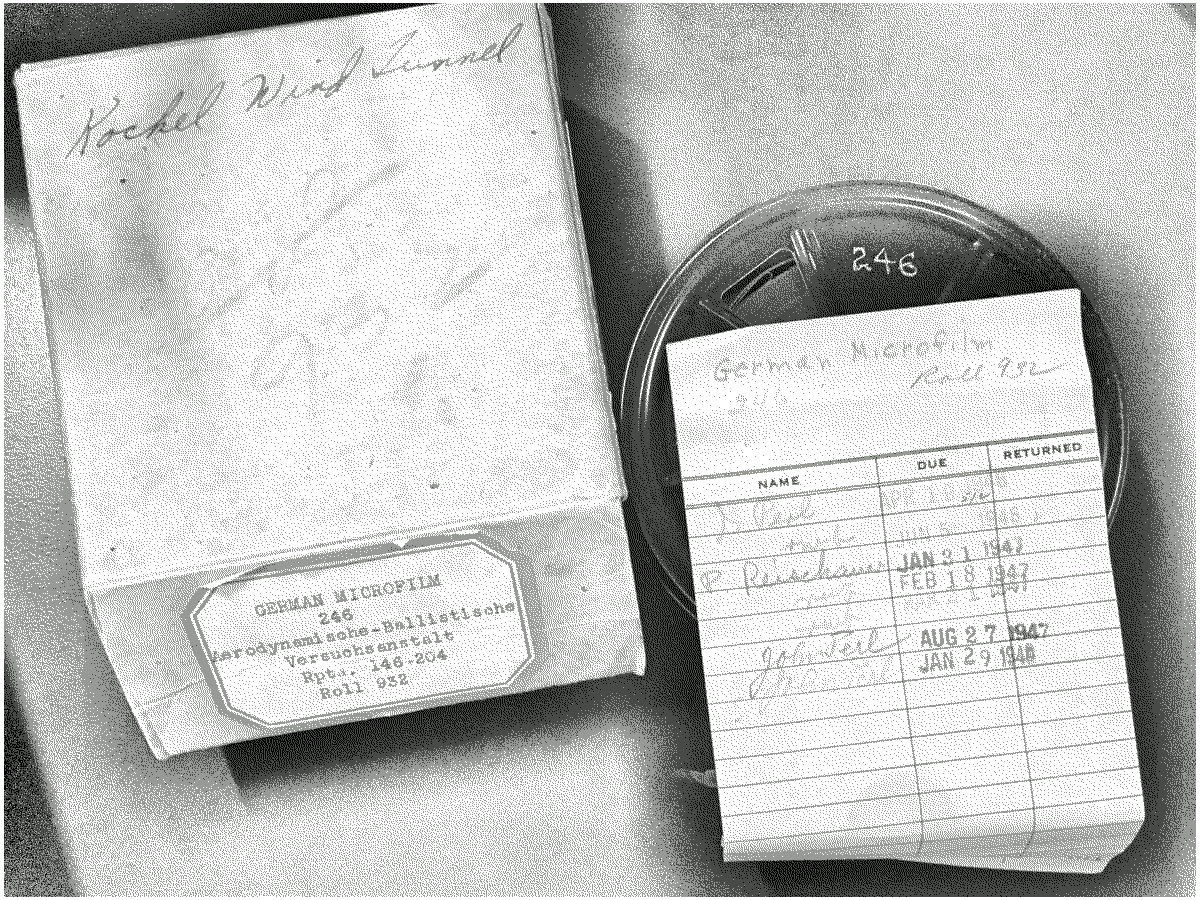
The significance here is that reels 244 to 246 contain the only nearly complete collection of these reports that I know of. Reel 244 contains a list of all reports, including English translations of their titles. Some of these reports are available elsewhere in university archives (and for some reason occasionally in the microfilm stacks of the Library of Congress), but this collection at UCLA is the only nearly complete collection.
Provenance of UCLA's collection
UCLA provides no direct information about the source of this collection. The boxes themselves are stamped with the following message:
U. S. NAVY DEPARTMENT
ADMINISTRATIVE OFFICE
OFFICE OF RECORDS ADMINISTRATION
MICROPHOTOGRAPHIC SERVICE
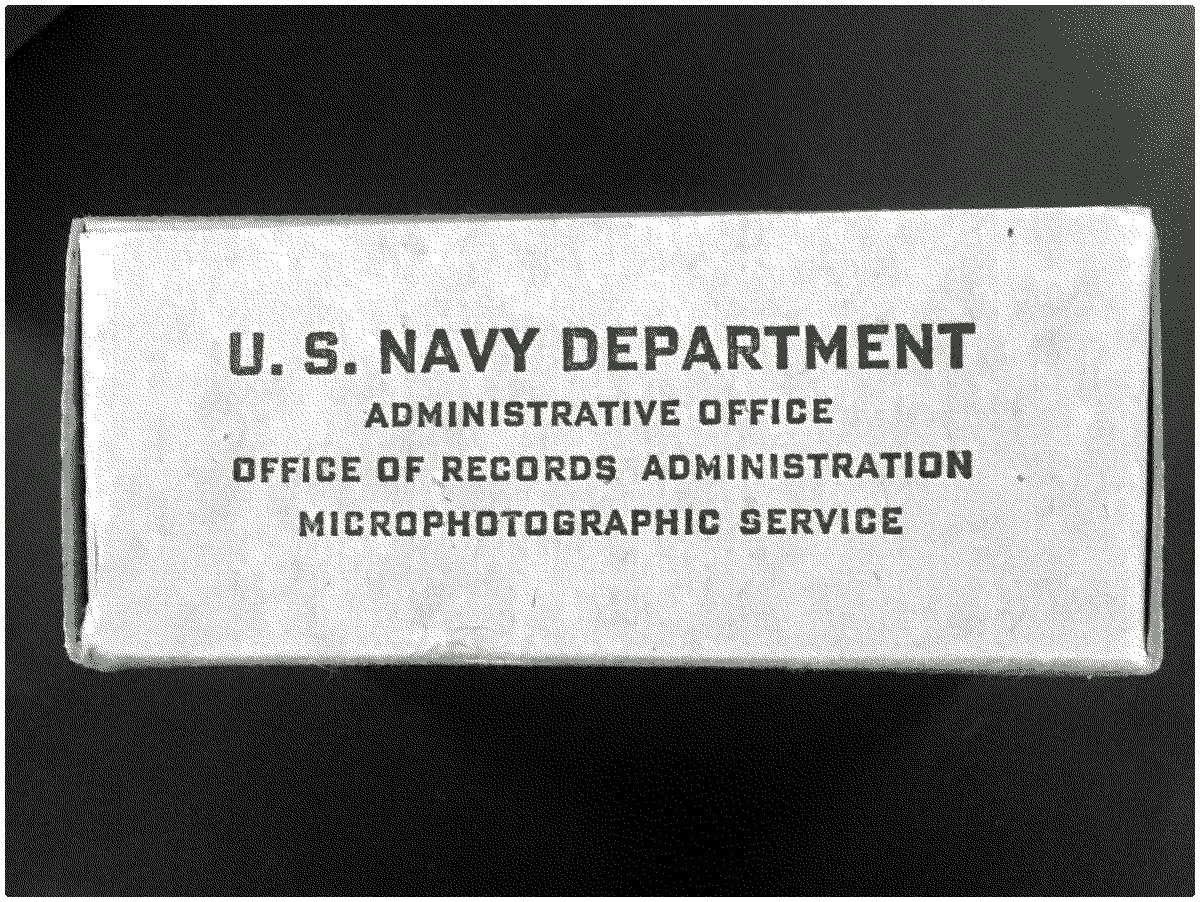
The US Navy's involvement led me to search the National Archives and eventually find the index to the Göttingen documents. That index comes from the Naval Technical Mission in Europe (NTME), an organization tasked with visiting German research laboratories, interrogating their scientists and engineers, and collecting documents and information about German technical capabilities. NTME Serial No. 348, written on June 21st, 1945, states that the "Goettingen Classified Research Library is in the process of being microfilmed at this activity. It should be completed within a week and the films will be forwarded at that date." This observation confirms the origin of that portion of the collection, though I do not know the precise origin of the other portions of the collection.
At least one reel (reel 243) is also stamped "Lockheed Engineering Library". Other evidence supports that Lockheed in Burbank, CA owned the collection at some point. Most reels have library cards, and the names listed on the cards are mostly Lockheed employees in the mid to late 1940s to early 1950s. Not all names are readable. The following Lockheed employees checked out these reels at some point:
-
C. J. Buzzetti
-
W. L. Howland
-
John Perl (person most often using the collection)
-
E. C. Posner
The earliest checkout date that I saw was November 6th, 1945. On that date, "W. Hayes" (likely Wallace Hayes when he was working on his doctorate at Caltech) checked out reel 5. This fact demonstrates that other people outside of Lockheed had access to the collection, and supports the idea that the collection has been in Southern California since then. The latest date on the library cards is December 29th, 1950 (by John Perl).
I suspect that Lockheed received a copy of this collection from the US Navy directly. The index notes that "qualified industrial organizations and research agencies" could receive copies.
I know from experience that UCLA received a large number of technical reports from Lockheed. For example, UCLA's copy of the previously-mentioned "Desk Catalog" comes from Lockheed.
The UCLA library gave the collection the uniform title of "[German aeronautics and aircraft reports from World War II]". The boxes are labeled "GERMAN MICROFILM". Based on some available references, it appears that Lockheed employees referred to the collection as the "German Microfilm" collection as a whole.
The approximate provenance of the collection then is the following:
-
United States Naval Technical Mission in Europe
-
Lockheed Corporation
-
University of California Systemwide Library Facility-South (formerly SRLF)